
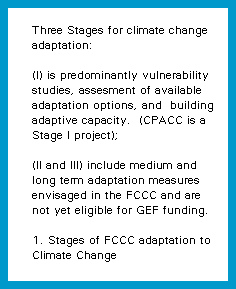

Global concern about accelerated climate change and its repercussions prompted the international community to begin negotiating a Framework Convention on Climate Change (FCCC.) in 1991. The Convention establishes a legal framework for responding to global climate change through the promotion of measures aimed at mitigating emissions of GHG and preparing for adaptation to the adverse effects of climate change. The FCCC agreed that adaptation to these adverse effects will require short, medium, and long-term strategies which should be cost effective, should take into account important socio-economic implications, and should be implemented on a stage-by-stage basis in developing countries that are Parties to the Convention. The sequence of activities are presented in box 1.
Furthermore, the FCCC agreed that for the Stage I the Conference of the Parties would entrust the Global Environmental Facility(GEF) to meet the agreed costs of the required activities.
The FCCC has been ratified by most Caribbean countries. More significantly, the Caribbean region, along with other small island and low-lying states, has been effective in drawing the attention of the international community to the potential adverse impacts of climate change on their economies. The region has also been active in the work of the IPCC, including the Coastal Zone Management Subgroup of the Response Strategies Working group.
 Home
Home
Questions or problems regarding this web site should be directed to
[email protected].
Copyright © 1998 CPACC. All rights reserved.
Last modified: Tuesday, May 23, 2000.