 Home
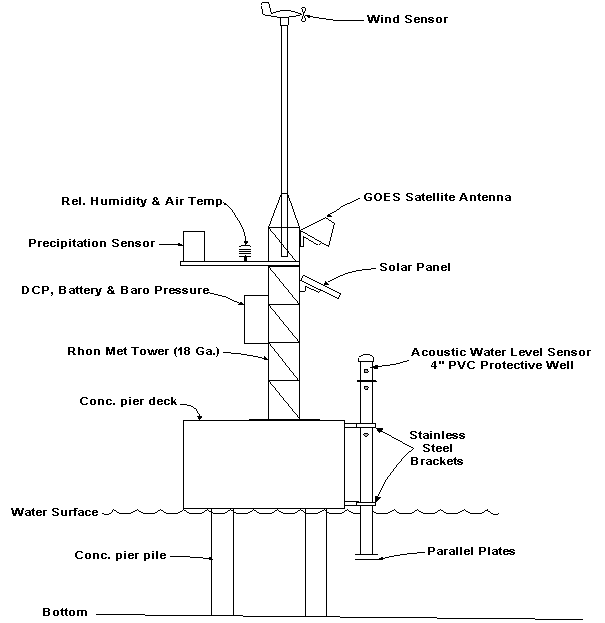
HomeThe sea level/climate observation network proposed for installation in each of the twelve participating countries will include a standardized set of instruments to measure water level, vertical land motion (which affects the relative relationship between sea surface and land interface), air and sea temperature, wind velocity, precipitation, and other site-specific ancillary variables. The network will be composed of 18 state-of-the-art gauges generating digitized data available in near real time by satellite telemetry or telephone. In addition, each tide gauge bench mark will be fixed in geocentric coordinates so that the vertical movement of the land can be distinguished from sea level changes (local tide gauges measure a combination of the two). The U.S. National Ocean Service of the National Oceanographic and Atmospheric Administration (NOAA) has been involved in the installation of tidal gauges around the world as part of the Global Sea Level Observing System (GLOSS), and will act as lead agency in the installation of the proposed network. Each participating country will be directly involved in the selection of sites, and designated national agencies, such as the National Weather Service, will manage their individual observatories. The Caribbean Meteorological Institute (CMI) will be the lead regional agency, and will take on the responsibility of overseeing the network after project completion. To assure long-term financing for this activity, the project will establish the Tidal Gauge Replacement Fund (US$50,000) as an earmarked account within CMI for the maintenance and replacement, as needed, of the sea level tidal gauges. It is expected that the Tidal Gauge Replacement Fund would be supplemented or replenished through the collection of data user fees, where appropriate, and other related contributions.
HomeQuestions or problems regarding
this web site should be directed to [email protected].
Copyright © 1998 CPACC. All rights reserved.
Last modified: Friday, January 11, 2001.